Best C++ Books and Resources for Beginners in 2026
The internet is full of C++ resource lists. Most of them recommend the same handful of books regardless of whether they’re actually good for beginners, or whether they’ve been superseded by better alternatives.
This list is different. It’s opinionated, ranked by usefulness for actual beginners, and honest about the limitations of each resource. Every recommendation here is something a new C++ learner can use immediately — not a reference book that requires existing expertise to navigate.
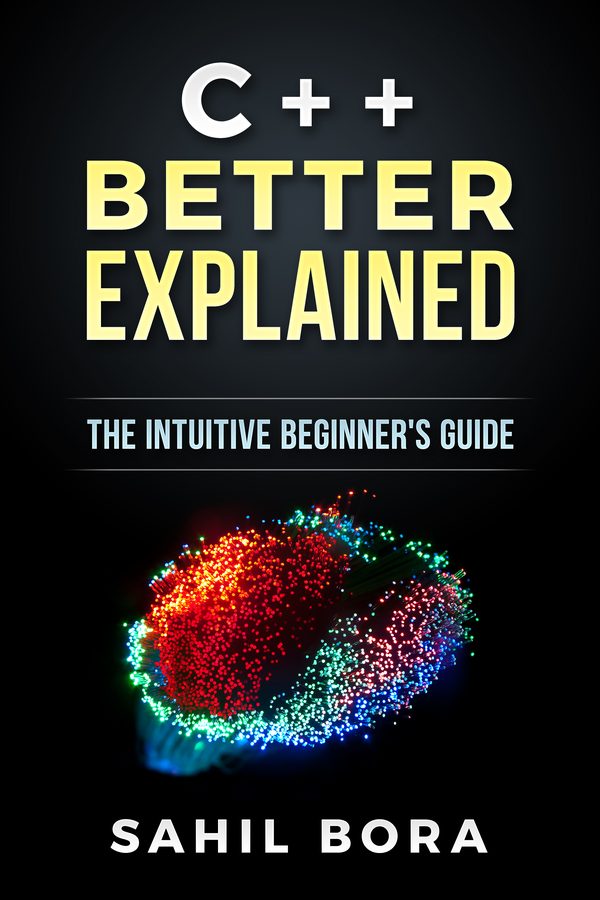
#1 pick for beginners
C++ Better Explained
The beginner book built around plain-English mental models — pointers, memory, OOP, and the compilation model finally click. 87 focused pages instead of a 1,300-page reference you'll never finish.
Get the Book — $19 →"Great book, well set out. The diagrams are what sets your book apart. Different learning styles require different approaches. Lines and lines of code mean nothing to someone who is a visual learner. Your diagrams make understanding much easier for visual learners. It is the initial first steps where someone either gives up or continues."
— Michael Heenan, C++ Better Explained readerVideo Walkthrough
Best C++ Books at a Glance (2026)
| Book | Best for | Level | Price | Verdict |
|---|---|---|---|---|
| C++ Better Explained | Understanding why the code works, not just syntax | Beginner | $19 | Best starting point for beginners |
| C++ Primer | A thorough, structured foundation | Beginner–Intermediate | Paid | Best comprehensive textbook |
| Programming: Principles and Practice | Learning to think like a programmer | Beginner | Paid | Best university-style intro |
| A Tour of C++ | A fast tour of modern C++ | Intermediate | Paid | Best quick modern overview |
| Effective C++ | Writing better, safer C++ | Intermediate | Paid | Best for leveling up after the basics |
| learncpp.com | A free, complete learning path | Beginner | Free | Best free resource |
What Is the Best C++ Book for Beginners?
The best C++ book for beginners is C++ Better Explained — it’s built around plain-English explanations and mental models rather than exhaustive reference material, so you actually understand why the code works. If you want a free alternative, learncpp.com is the most complete free tutorial on the internet, though it’s much longer and drier.
The rest of this list breaks down every option — books, courses, practice platforms, and references — so you can build a learning stack that fits how you learn.
How to Use This List
Different resources serve different purposes. A book gives depth. A course gives structure. A reference site answers quick questions. You don’t need everything here — pick one primary learning resource and supplement with the others as needed.
The structure of this article:
- Books (best for depth and offline learning)
- Free online courses and tutorials
- Practice platforms (where you apply what you learn)
- Reference sites (for looking things up quickly)
- What to avoid
Books
For Absolute Beginners
⭐ “C++ Better Explained” by Sahil Bora — Get it here
If you’re a complete beginner or find that standard textbooks aren’t clicking, this is the book to start with. C++ Better Explained is built around one principle: understanding why things work, not just memorising syntax. It uses clear mental models, real examples, and plain English to explain the concepts that trip up most beginners — pointers, memory, OOP, and the compilation model.
What makes it different from the books below: it’s written specifically for people who find C++ confusing. The goal isn’t to be comprehensive — it’s to make the hard parts finally make sense.
Use this if: you’re starting from scratch, you’ve tried other resources and felt lost, or you want to build genuine understanding rather than just copying patterns.
👉 Get C++ Better Explained — $19
“C++ Primer” by Stanley Lippman, Josée Lajoie, and Barbara Moo
This is the most comprehensive beginner-to-intermediate book on C++. It’s long (over 900 pages), but it’s organized logically — you read it front to back and concepts build on each other. The fifth edition covers C++11, which was the last major revision that changed how C++ is written. Modern C++ (C++17, C++20) builds on top of what you learn here.
What makes it good for beginners: it explains the “why,” not just the “how.” You don’t just learn that const exists — you understand why you’d use it and what happens when you don’t.
What to know: it’s long and takes weeks to get through properly. Don’t try to rush it. A 6th edition has been listed for years, but the publisher still shows it as not for sale, so the 5th edition is the one you’ll get. See the full C++ Primer review for who it suits and who should start elsewhere.
“Programming: Principles and Practice Using C++” by Bjarne Stroustrup
Bjarne Stroustrup created C++. This book is his introduction to programming using C++ as the vehicle. It’s less of a C++ reference and more of a “how to think like a programmer” course in book form. It’s used in university-level programming courses and covers everything from your first program to graphical user interfaces.
What makes it good for beginners: Stroustrup is an exceptional teacher, and the book’s progression is thoughtful. It doesn’t assume programming experience.
What to know: the 3rd edition (2024) is about half the length of the previous one, at 656 pages, and uses C++20 and C++23. Its graphics chapters now use Qt, which you’ll need to install separately — skip those at first if setup gets in the way and focus on the core content. See the full PPP review, or the C++ Primer vs PPP comparison if you’re choosing between the two.
“Beginning C++23” by Ivor Horton and Peter Van Weert
If you want a modern starting point, this book covers C++23 (the most recent standard) from scratch. It’s more concise than C++ Primer and more up-to-date. Good if you want to learn modern C++ idioms from the start rather than working through older patterns.
For Intermediate Learners (After the Basics)
“Effective C++” and “More Effective C++” by Scott Meyers
Once you know the basics, Scott Meyers’ books are how you learn to write good C++. These are collections of specific, actionable guidelines (“prefer const to #define”, “use destructors to prevent resource leaks”) with detailed explanations of why each one matters. They’re among the most influential C++ books ever written.
“A Tour of C++” by Bjarne Stroustrup
A concise overview of modern C++ from the language’s creator. Not for beginners — you need to already understand the basics — but for someone who knows C++ fundamentals and wants to understand modern idiomatic C++. It’s short enough to read in a weekend.
Free Online Tutorials
learncpp.com
The single best free resource for learning C++ on the internet. It’s comprehensive, well-structured, and up-to-date with modern C++ practices. Unlike most free tutorials, it doesn’t skip the hard stuff — it covers memory, pointers, and object-oriented programming properly.
Structure: it’s organized like a textbook, with chapters that build on each other. You can work through it front to back. Each chapter has examples and exercises.
The only downside: it doesn’t have built-in exercises or a coding environment, so you’ll need to write and run code locally as you read.
Use this if: you want a free, structured learning path that covers everything properly.
cppreference.com
This is the authoritative C++ reference. It documents every feature, every standard library function, and every behavior of the language in precise detail. It’s not for learning — it’s for looking things up once you already understand the concepts.
Bookmark this immediately. You’ll use it constantly as you grow as a C++ developer.
Use this if: you want to know exactly what a function does, what its parameters are, or what the standard says about a specific behavior.
The Cherno (YouTube)
The Cherno is a YouTube channel by Yan Chernikov, a former EA game developer. His C++ series is one of the most popular and well-regarded video resources for learning C++. The videos are practical — he writes code on screen and explains what he’s doing and why.
What’s particularly good: his explanations of memory, pointers, and performance are excellent. He doesn’t just show you how to write C++ — he explains what’s happening at the hardware level, which gives you a much deeper understanding.
Use this if: you learn better from videos than reading, or if you want to understand how C++ relates to performance and memory.
freeCodeCamp’s C++ Course (YouTube)
A free, structured video course covering C++ from scratch. It’s about 4 hours long and covers the basics in a clear, beginner-friendly way. Good for getting started quickly, though it covers less depth than learncpp.com.
Use this if: you want a quick video introduction before going deeper elsewhere.
Practice Platforms
Reading about C++ and writing C++ are different skills. These platforms give you problems to solve.
LeetCode
The most widely used platform for programming practice. Its problems are organized by difficulty (easy, medium, hard) and topic (arrays, strings, trees, etc.). C++ is fully supported.
For C++ beginners, stick to “Easy” problems in the Arrays and Strings categories to start. You’ll apply what you’ve learned about loops, conditionals, and the standard library.
LeetCode is also the primary platform for technical interview preparation if you’re eventually aiming for software engineering roles.
Codeforces
A competitive programming platform with regular contests and a massive archive of problems. The community is active and the problems are well-crafted. More mathematically oriented than LeetCode.
Use this if: you enjoy competition and want to push your C++ speed and problem-solving skills.
HackerRank
Has a specific C++ track with exercises organized by concept. Good for targeted practice on specific language features (strings, classes, templates, etc.).
Use this if: you want structured exercises tied to specific C++ topics.
Exercism.io
Exercism offers coding exercises with mentor feedback. It’s less competitive than LeetCode or Codeforces — the focus is on improving through feedback. The C++ track covers the language systematically.
Use this if: you want mentored learning and feedback on your code style, not just correctness.
Community and Help
Stack Overflow
When you get a compiler error you can’t figure out, paste it into Google and add “site:stackoverflow.com”. Someone has almost certainly asked the same question before. Stack Overflow is where the C++ community has been answering questions for years — the archive is invaluable.
Reddit: r/cpp_questions and r/learnprogramming
Both subreddits are friendly to beginners and have active communities willing to answer questions. r/cpp_questions is specifically for C++ help; r/learnprogramming is broader but covers C++ frequently.
Discord Servers
The “Programming” and “C++ Help” Discord servers have real-time help channels. For quick questions where you want a fast response, Discord is often faster than Stack Overflow.
What to Avoid
Some resources are popular but not good starting points for beginners.
“The C++ Programming Language” by Bjarne Stroustrup (the big one)
This is the comprehensive reference written by the language’s creator. It’s encyclopedic and authoritative. It is not a learning resource — it’s a reference. Reading it cover-to-cover as a beginner is like learning to drive by reading the automotive engineering manual. Use “Programming: Principles and Practice” instead.
Outdated tutorials that don’t use modern C++
Many free tutorials online are based on pre-C++11 C++. They’ll teach you to use NULL instead of nullptr, printf instead of std::cout, and raw arrays instead of std::vector. Not wrong exactly, but you’ll end up learning patterns that modern C++ code has moved away from. Check when a tutorial was last updated. Anything without C++11 coverage is showing its age.
W3Schools for C++
W3Schools is fine for HTML and CSS. Their C++ content is minimal, often incorrect, and not maintained by C++ experts. Use learncpp.com instead.
Starting with competitive programming before knowing the basics
Competitive programming platforms teach problem-solving, but they assume you already know the language. If you jump straight to LeetCode before knowing functions, arrays, and OOP, you’ll struggle with the wrong problems. Learn the language first, then use LeetCode to practice applying it.
A Practical Learning Stack for 2026
If you want a simple, effective combination:
Primary: Work through learncpp.com front to back. Write every example yourself. Do the exercises.
Video supplement: Watch The Cherno’s C++ playlist on YouTube alongside the learncpp.com chapters on memory and performance.
Practice: After Chapter 10 of learncpp.com, start doing Easy problems on LeetCode in C++.
Reference: Bookmark cppreference.com and use it whenever you need to look up a function or type.
Book: If you want concepts explained clearly from the ground up, C++ Better Explained is the best starting point. For a deeper comprehensive reference once you have the basics, pick up “C++ Primer.”
That’s all you need. The risk with C++ learning isn’t a shortage of resources — it’s getting overwhelmed by too many and bouncing between them without making real progress. Commit to one path and work through it.
Summary
The best free resource for learning C++ from scratch is learncpp.com. The best book for beginners is C++ Better Explained; for a comprehensive follow-up reference once you have the basics, “C++ Primer.” For video learners, The Cherno’s YouTube series is excellent. Use cppreference.com as a reference, not a learning resource. Practice on LeetCode or HackerRank once you know the basics. Avoid outdated tutorials and starting with competitive programming too early.
Pick one main resource. Use it consistently. Write code every day. That combination beats any specific resource choice.
Take Your C++ Further
If you’re looking to go deeper with C++, the C++ Better Explained Ebook is perfect for you — whether you’re a complete beginner or looking to solidify your understanding. Just $19.
👉 Get the C++ Better Explained Ebook — $19
Related Articles
- Is C++ Primer Good for Beginners? An Honest Review
- C++ Book vs Course vs YouTube: Which Actually Works? — how to pick a primary learning resource and avoid tutorial drift.
- Is C++ Worth Learning in 2026? An Honest Answer — job demand, salaries, and who should skip it.
- How to Start Learning C++ in 2026: A Complete Beginner’s Roadmap — a structured step-by-step path from your first program to OOP and pointers.
- C++ Roadmap 2026: What to Learn and In What Order — the complete learning roadmap with stage-by-stage guidance and timelines.
- What Is C++ Used For? Real-World Applications Explained — understand the real-world domains where C++ is used before you commit to learning it.
- Programming: Principles and Practice Using C++ Review — Stroustrup’s beginner textbook, reviewed honestly.
- C++ Primer vs Programming: Principles and Practice — which to read first.