Should I Learn C or C++ First? A Clear, Honest Answer
This is one of the most common questions new programmers ask, and the internet is full of contradictory answers. Some people insist you must learn C first “to build a foundation.” Others say that’s outdated advice.
Here’s the clear version.
For most beginners, learn C++ first. You do not need to learn C before C++. The only strong reason to start with C is if you specifically need it — usually for embedded systems or a course that requires it.
Let’s unpack why, and how to decide for your situation.
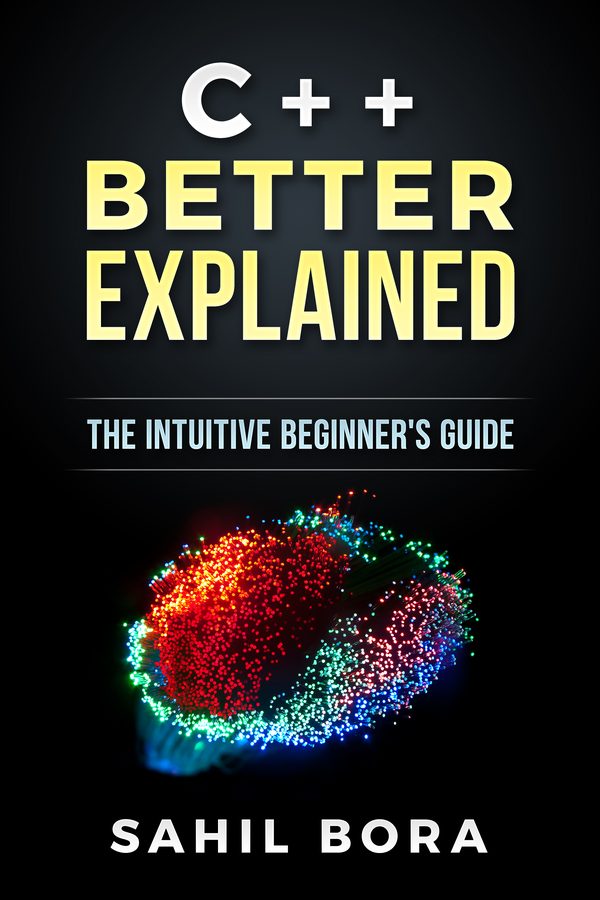
Starting with C++?
C++ Better Explained
The beginner book built around plain-English mental models — pointers, memory and OOP finally click. 87 focused pages instead of a 1,000-page textbook.
Get the Book — $19 →The most persistent piece of advice in this debate is that C is a prerequisite for C++. It usually comes from older programmers who learned that way decades ago.
It’s not true anymore, and here’s why: C++ is not “C with extra features you unlock later.” It’s its own language with its own way of doing things. Modern C++ encourages patterns — std::vector instead of raw arrays, std::string instead of character buffers, smart pointers instead of manual malloc/free — that are completely different from how you write idiomatic C.
If you learn C first, you’ll spend time mastering manual techniques that modern C++ specifically tells you to avoid. Then you’ll have to unlearn some of those habits. For most people, that’s a detour, not a foundation.
Decide Based on Your Goal
The right answer depends almost entirely on what you want to build. Find yourself below.
Learn C++ first if…
- You want a programming job in general software, application, or backend development. C++ is far more in demand than C for these roles.
- You want to make games. Major engines like Unreal use C++. This is squarely C++ territory.
- You’re learning programming broadly and want a powerful, widely-used language that opens doors.
- You want to understand modern, real-world codebases, most of which use C++ rather than plain C.
Learn C first if…
- You’re going into embedded systems or microcontrollers. This world is still heavily C-based, and C’s simplicity maps closely to the hardware.
- You’re doing operating-systems or kernel-level work, where C remains the dominant language.
- Your university course or bootcamp requires it. Follow the syllabus — fighting it just makes your life harder.
It genuinely doesn’t matter much if…
- You just want to learn how computers work at a low level. Either language teaches that. Pick C++ for the broader payoff, or C if you want the most minimal starting point.
C vs C++ at a Glance
| C | C++ | |
|---|---|---|
| Style | Procedural | Multi-paradigm (procedural + object-oriented + generic) |
| Memory | Fully manual (malloc/free) | Manual or automatic (smart pointers, containers) |
| Learning surface | Smaller — fewer features | Larger — more concepts |
| Safety nets | Few | Many, in modern C++ |
| Best for | Embedded, OS, kernels | Games, apps, general software, performance work |
| Job demand | Niche but stable | Broad |
The takeaway: C is smaller, but smaller doesn’t mean easier to do real work in — you simply have to build more by hand. C++ has more to learn, but its modern features make everyday programming more comfortable once you’re past the basics.
What About “C++ Is Just Harder”?
It’s true that C++ has more features than C, and that can feel overwhelming. But here’s the thing: you don’t have to learn all of C++ to start using it.
A beginner uses a small, friendly core of the language — variables, loops, functions, classes, and a couple of containers like std::vector. The advanced features (templates, move semantics, metaprogramming) can wait until you actually need them, which might be months or years away.
So the “C++ is huge” objection is real, but it’s not a reason to start with C. It’s a reason to learn C++ in the right order, ignoring the advanced stuff until later. If you want a deeper look at the difficulty curve, see Is C++ Hard to Learn?
If You Chose C++: Your First Five Steps
Decided on C++? Here’s exactly where to begin:
- Set up your environment — install a compiler and write your first program with the C++ setup guide.
- Understand Hello World line by line so nothing feels like magic — see C++ Hello World Explained.
- Learn variables and data types with the variables guide.
- Master control flow — conditionals and loops.
- Follow a structured path so you never wonder what’s next: the complete C++ learning roadmap.
Curious how long the whole journey takes? See How Long Does It Take to Learn C++? for an honest timeline.
Summary
Should you learn C or C++ first? For the vast majority of beginners, start with C++ — you don’t need C as a prerequisite, and starting with C++ gets you to real, useful programs faster. Choose C first only if your goal is embedded systems, OS-level work, or a course that demands it.
Don’t get stuck on this decision. Pick the one that matches your goal, and start writing code today.
👉 Get the C++ Better Explained Ebook — $19
Related Guides
- Is C++ Worth Learning in 2026? An Honest Answer — job demand, salaries, and who should skip it.
- Best C++ Books and Resources for Beginners in 2026 — the best C++ books for beginners, ranked honestly, plus the free resources that are actually worth your time.
- How Long Does It Take to Learn C++? An Honest Timeline — what to expect once you’ve chosen C++.
- C++ vs Python: Which Language Should You Learn First? — the other big “which language” question.
- C++ vs Java: Key Differences and Which to Learn — how C++ compares to another popular choice.
- Is C++ Hard to Learn? An Honest Answer for Beginners — an honest look at the difficulty curve.
- Learn C++ from Scratch: The Complete Beginner Roadmap — the full structured learning path.