Is C++ Worth Learning in 2026?
Short answer: yes — if your goals line up with what C++ is actually good at. It is the wrong first choice for someone who wants to build a website this month, and the right choice for anyone drawn to games, embedded hardware, finance, or performance work. This article gives you the honest version of both sides so you can decide quickly instead of reading ten forum threads.
The State of C++ in 2026
C++ is not a legacy language on life support. As of 2026 it sits in the top three of the TIOBE index, alongside Python and C, and it has held a top-five position for essentially its entire existence. Roughly forty years after its creation, it is still one of the languages the modern world is built on.
More telling than rankings is where the code lives:
- Game engines. Unreal Engine is C++. If you want to work in AAA games or build high-performance engines, this is non-negotiable.
- High-frequency trading. When a few microseconds decide profit, firms reach for C++.
- Embedded systems and IoT. Firmware for cars, medical devices, drones, routers, and appliances runs on C and C++.
- Browsers, databases, and operating systems. Chrome, Firefox, MySQL, MongoDB, and large parts of Windows and macOS internals are C++.
- AI and machine learning infrastructure. The Python you write for machine learning calls down into C++ underneath. TensorFlow and PyTorch have C++ cores.
That last point matters more than most beginners realise. The AI boom did not replace C++ — it increased demand for people who can make inference fast.
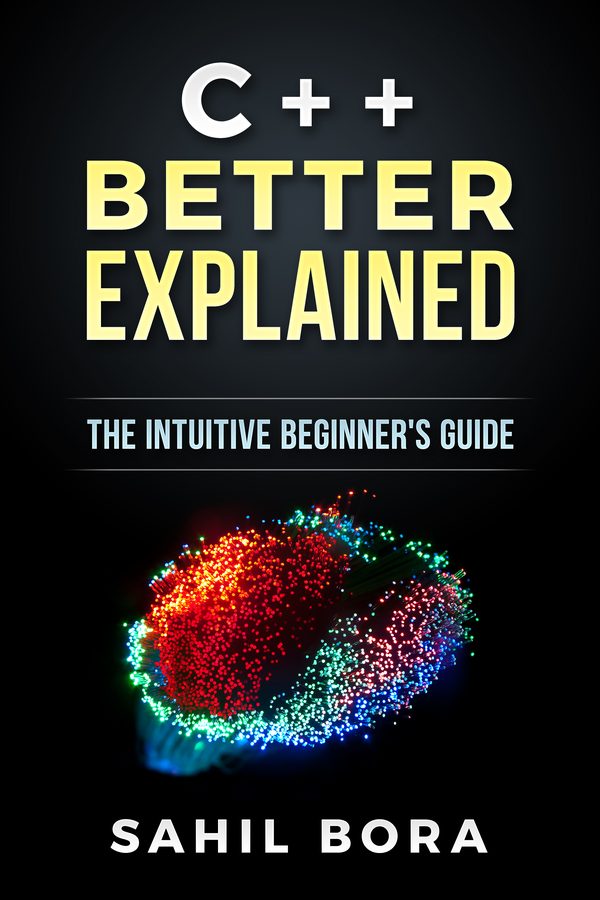
Decided to learn it?
C++ Better Explained
The beginner book built around plain-English mental models — pointers, memory and OOP finally click. 87 focused pages instead of a 1,000-page textbook.
Get the Book — $19 →What C++ Developers Earn
Salary data varies wildly by source, so treat these as a rough band rather than gospel. For US-based C++ developers in 2026, reported averages land roughly between $110,000 and $142,000 per year, with PayScale reporting a lower figure and Indeed a higher one — a spread that mostly reflects different methodologies and job-title definitions.
The more useful pattern is this: C++ roles cluster in industries that pay well because the work is hard and the talent pool is smaller. Trading firms, chip companies, and engine developers compete for a limited number of people who genuinely understand memory and performance. Fewer job postings than Python, but less competition per posting.
Who Should Learn C++
Learn C++ if any of these describe you:
- You want to build games. Unreal, custom engines, console development — C++ is the industry’s language.
- You like hardware. Embedded, robotics, IoT, anything where code touches a physical device.
- You care about performance. Trading, graphics, simulation, real-time audio, scientific computing.
- You want to understand computers deeply. C++ forces you to learn memory, pointers, and what the machine actually does. That knowledge transfers to every other language you will ever use.
- You want to work on large existing systems. An enormous amount of critical infrastructure is C++ and needs maintaining.
Who Should Skip It (For Now)
Honesty is more useful than cheerleading. C++ is probably the wrong choice right now if:
- You want to build websites. Learn JavaScript. C++ has essentially no place in front-end work.
- You want a job in six weeks. C++ has a longer ramp than Python or JavaScript. Bootcamp-speed hiring rarely targets it.
- You mainly want to do data analysis or scripting. Python wins outright.
- This is your very first exposure to programming and you have no specific goal. You can start with C++ — plenty of people do — but Python will give you faster wins while you figure out what you actually enjoy building.
None of these are permanent. Learning C++ later, after Python, is a completely normal path — and often a more comfortable one.
The Real Argument For Learning C++
The career case is solid, but the strongest reason is less obvious.
C++ does not hide anything from you. When you write Python, memory management, pointers, and the stack all happen somewhere out of sight. When you write C++, you have to know what a pointer is, where your data lives, and what the difference between the stack and the heap actually means.
That is exactly why it is harder — and exactly why it makes you better. Developers who learn C++ tend to write better code in every language afterwards, because they finally understand the machine their code runs on. That understanding does not go obsolete when a framework does.
Is C++ Too Hard to Be Worth It?
C++ is harder than Python. It is not as hard as its reputation suggests.
Most of the difficulty comes from how it is usually taught — syntax dumped on you before anyone explains the mental model. Pointers are not conceptually difficult once someone draws you the picture of memory as addresses and values. Neither is memory management, or references, or the compiler’s error messages.
Realistically, expect 2-3 months to get comfortable with the fundamentals and 6-12 months to be genuinely productive if you practise consistently. That timeline is broken down in how long it takes to learn C++, and the honest difficulty assessment lives in is C++ hard to learn.
The Verdict
C++ in 2026 is worth learning if you want to build things where performance, hardware, or scale actually matter — games, embedded systems, finance, infrastructure, the layer underneath AI. It rewards you with deep understanding and access to roles that fewer developers can fill.
It is not worth learning if your goal is a fast route into web development or data scripting. Pick the tool that matches the job you want.
If you are in the first group, the only thing left is starting properly — with a clear path instead of a pile of random tutorials.
Take Your C++ Further
If you have decided C++ is for you, the fastest way in is a single structured explanation rather than a hundred scattered tutorials. The C++ Better Explained Ebook covers the fundamentals in plain English, with the analogies and diagrams that make pointers and memory finally click. Just $19.
👉 Get the C++ Better Explained Ebook — $19
Related Guides
- How to Learn C++ From Scratch: The Complete Roadmap — the full step-by-step path, in order, from your first program onward.
- How Long Does It Take to Learn C++? An Honest Timeline — realistic timelines for fundamentals, projects, and job readiness.
- Is C++ Hard to Learn? An Honest Answer for Beginners — what actually makes C++ difficult and how to get past it.
- Best C++ Books and Resources for Beginners in 2026 — the books and free resources worth your time, ranked honestly.
- C++ vs Python: Which to Learn First — a direct comparison if you are still choosing.
- What Is C++ Used For? Real-World Applications Explained — the concrete things people build with it.