C++ Primer vs C++ Primer Plus: Which Should You Buy?
Short answer: they’re two completely different books that happen to share most of a name. C++ Primer (Lippman, Lajoie and Moo) is precise and thorough, and suits people who have programmed before. C++ Primer Plus (Stephen Prata) is gentler and more step-by-step, but it’s 1,440 pages and its print edition is out of print. Both cover C++11.
Disclosure: I wrote C++ Better Explained, a paid book for beginners. I’ll say plainly where one of these two is the better choice.
Both are long
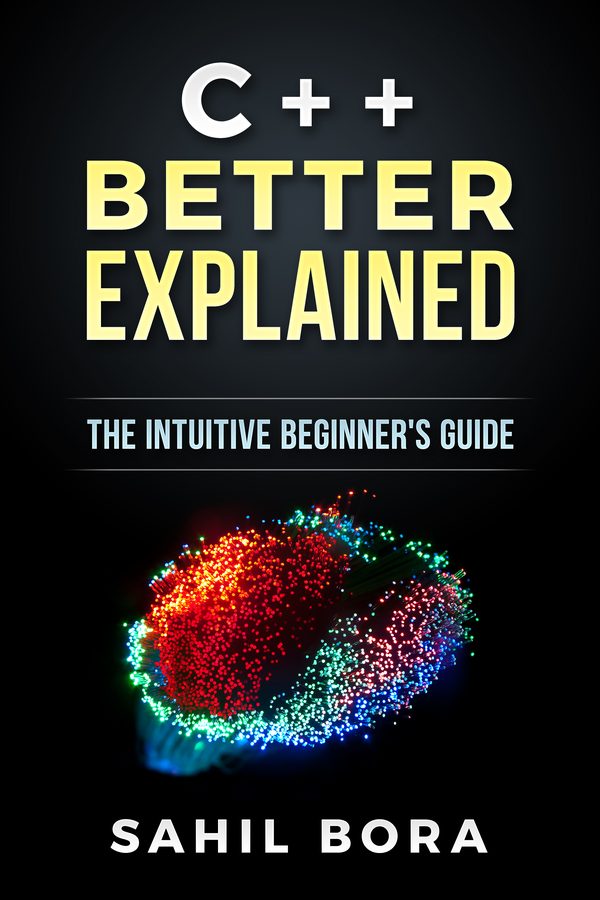
C++ Better Explained
C++ Primer is just under 1,000 pages and C++ Primer Plus is 1,440. If you'd rather start small, this book explains pointers, memory and OOP for true beginners, in 87 plain-English pages with diagrams.
Get the Book — $19 →Why the Names Are So Confusing
The two books have different authors and were written independently. They’re both published by Addison-Wesley, though, and both use “primer” in the old publishing sense: a thorough foundational text, not a quick start. It’s easy to order one when you meant the other.
Side by Side
| C++ Primer | C++ Primer Plus | |
|---|---|---|
| Authors | Stanley Lippman, Josée Lajoie, Barbara Moo | Stephen Prata |
| Current edition | 5th, 2012 | 6th, 2011 |
| Length | Just under 1,000 pages | 1,440 pages |
| C++ standard | C++11 | C++11 |
| Style | Precise and dense | Gradual, many short examples |
| Best for | People who have programmed before | Patient beginners |
| Availability | 5th edition available (a 6th is listed but not for sale) | Print edition out of print; eBook still sold |
C++ Primer
What it does well: it’s careful and exact. Definitions are right, concepts arrive in a sensible order, and it introduces std::string and std::vector before C-style arrays and raw pointers. Once you know C++, it stays useful as a reference for years.
Where it’s hard: it moves quickly for someone who has never programmed, and it’s close to 1,000 pages. A 6th edition has been listed by the publisher for a long time, but as of this writing it isn’t for sale, so the 5th is the one to buy.
More in our full review: Is C++ Primer good for beginners?
C++ Primer Plus
What it does well: it teaches programming as well as C++. The publisher describes it as covering programming fundamentals, including structured code and top-down design, with many short examples that each show one or two ideas at a time. Every chapter ends with review questions and programming exercises, and there’s a chapter on what C++11 added.
Where it’s hard:
- It’s 1,440 pages. That’s a lot of book to finish on your own.
- It teaches the C-style basics alongside C++. For example, it covers character-array strings in the same chapter that introduces the
stringclass. That’s useful background, but it’s not the modern-first order newer books use. - The print edition is out of print. The publisher still sells the eBook, and you may find used print copies.
Which Should You Choose?
- You’ve programmed before, in any language: choose C++ Primer. You’ll skip material you already know and get a more precise explanation of C++ itself.
- You’ve never programmed, you’re patient, and you like lots of small examples and exercises: choose C++ Primer Plus.
- You’ve never programmed and want something modern: neither. Look at Programming: Principles and Practice Using C++, which teaches from zero using C++20 and C++23 — see our review.
Are They Outdated?
Both describe C++11. Everything they teach is still valid C++, but neither covers what’s been added since: nothing from C++14, C++17, C++20 or C++23. If you learn from either, plan to catch up later with something newer, such as the free learncpp.com, which includes an appendix on each standard from C++11 to C++23.
If Neither Fits
- Programming: Principles and Practice Using C++ — written for people who have never programmed, and the most up to date of the classic textbooks.
- learncpp.com — free, starts from zero, and kept up to date.
- C++ Better Explained — short and plain-English, with diagrams, for true beginners. It focuses on the parts that stall most people: pointers, memory and OOP. It’s 87 pages, so you can finish it first, then move on to a big textbook with the foundations in place.
The Verdict
If you already program, C++ Primer is the better book. If you’re starting from zero, C++ Primer Plus is the gentler of the two, but at 1,440 pages and from 2011, you may be better served by a newer or shorter book first. Either way, don’t buy the wrong one by accident: check the authors on the cover.
Take Your C++ Further
If you'd like the fundamentals explained in one place, C++ Better Explained covers them in 87 plain-English pages, with analogies and code diagrams, including the parts that trip beginners up most: pointers, memory and OOP.
Get the book — $1987 pages · plain English · 30-day money-back guarantee
Related Articles
- Is C++ Primer Good for Beginners? — the full review.
- C++ Primer vs Programming: Principles and Practice — the other big comparison.
- Best C++ Books and Resources for Beginners — every option, ranked honestly.
- Is The C++ Programming Language Good for Beginners? — Stroustrup’s big reference.
- Is learncpp.com Enough to Learn C++? — the free alternative.